 Italian Antarctic Data Center
climate models
Type of resources
Topics
INSPIRE themes
Provided by
Formats
Representation types
Update frequencies
status
Scale
-
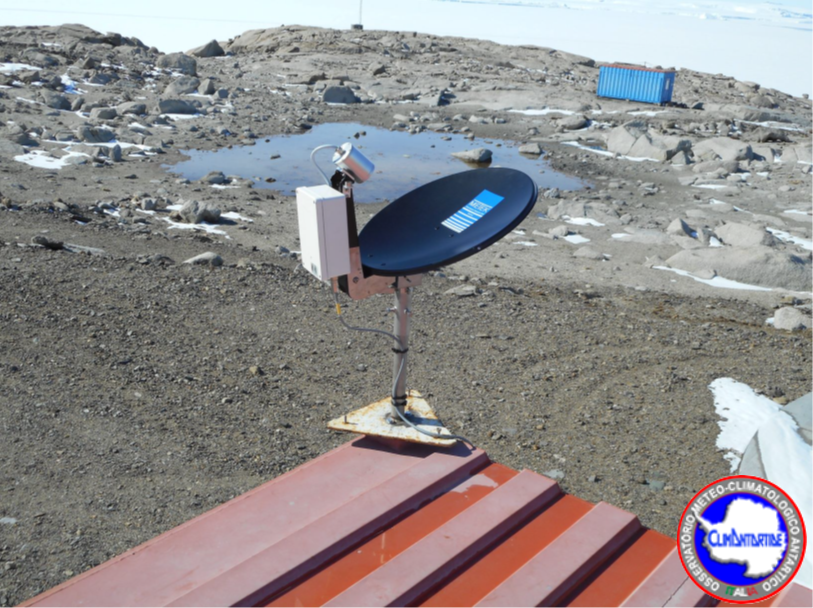
Data of the precipitation fallen during the summer months (November-December-January) on four expeditions, 2015-16, 2016-17, 2017-18, and 2018-19, in the Terra Nova Bay area, were obtained using a vertically pointing radar, disdrometer and snow gauge. The vertical pointing METEK Micro Rain Radar 2 (MRR) was installed in MZS at the end of November 2015. It records Doppler velocity spectra every 10 s at 32 range gates. The radar gate spacing was set to 100 m allowing the profiler to sound heights ranging from 100 to 3100 m above the surface. The raw K-band power spectra, collected by the MRR, were processed applying the method proposed by Maahn and Kollias (2012) to correct for noise and aliasing effects, making them suitable for snow observation. A Thies CLIMA laser disdrometer (LPM), has been operational since December 2014.The disdrometer can simultaneously count and measure the size and fall velocity of hydrometeors. A Total Rain weighing Sensor (TRwS) manufactured by MPS system was installed during the december 2018 - January 2019 campaign within the YOPP observing period. The TRwS is a total rain/snowfall weighing gauge with an orifice area of 400 cm2, a depth accuracy of 0.01 mm of w.e. and a one -minute sampling time resolution (Savina and others, 2012). The TRwS was protected by an alter shield in order to minimize wind effect over the accumulation inside the instrumentation.
-
The project is focused on the acquisition of data using the MZS_FRAD2008-02 interference filter radiometer, installed in November 2009 at Mario Zucchelli station, on the roof of the building OASI (74°41.6059' S 164°05.9423' E). The radiometer is active all year round and measures the global solar irradiance (watt / m2nm) at the values of 9 different wavelengths (about one spectrum per minute), where the filters are centered, and obtained from these the measure of the spectral irradiance with a resolution of 0.5 nm. The data is transferred to Italy on a daily basis via an Ethernet link. Data are acquired in the summer station of MZS from November 2009 to May 2013.
-
The project is focused on the acquisition of data using interference filter radiometer DC_FRAD2011-04. Radiometer has been located in February 2012 at Concordia station, on the physics shelter in Dome C (75°06.1620' S, 123°19.1342' E). Is active all year round and measures the global solar irradiance (watt/m2nm) at the values of 13 different wavelengths (about one spectrum per minute), where the filters are centered, and from these it can obtain the spectral irradiance with a resolution of 0.5 nm. The data is transferred to Italy on a daily basis via an Ethernet link. Data are acquired from January 2012 to May 2013.
-

Installation of two radiometers with interference filters (F_RAD) operating in the spectral region from 296 nm to 400 nm. The purpose is to measure the global solar irradiance at the values of the wavelengths where the filters are centered and from these derive the spectral irradiance with a resolution of 0.5 nm. The radiometers are currently positioned in the Antarctic stations of Mario Zucchelli and DomeC Concordia and operate permanently throughout the year. Measurements of absorbance of polysulphone dosimeters before and after exposure to UV solar radiation by laboratory spectrophotometer, data analysis, determination of the UV dose response curve vs absorbance variation and comparison of the results detected in the two sites. It can be used for the measurement of solar UV irradiance for research on the climate and the physics of the atmosphere.
-
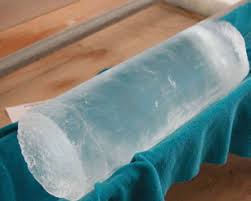
The IPICS-2kyr-Italia project, through multiple perforations in the Antarctic ice sheet, aims to provide new data on climatic variability over the last 2000 years. The ice caps are natural archives of the Earth's climatic and environmental history. The extraction of snow and ice cores have taken place during the summer Antarctic campaign (November 2013 - January 2014). The drilling site GV7 (70°41'S, 158°52'E; 1950 m), was chosen for the high snow accumulation and was located about 500 km from Mario Zucchelli Station.
-
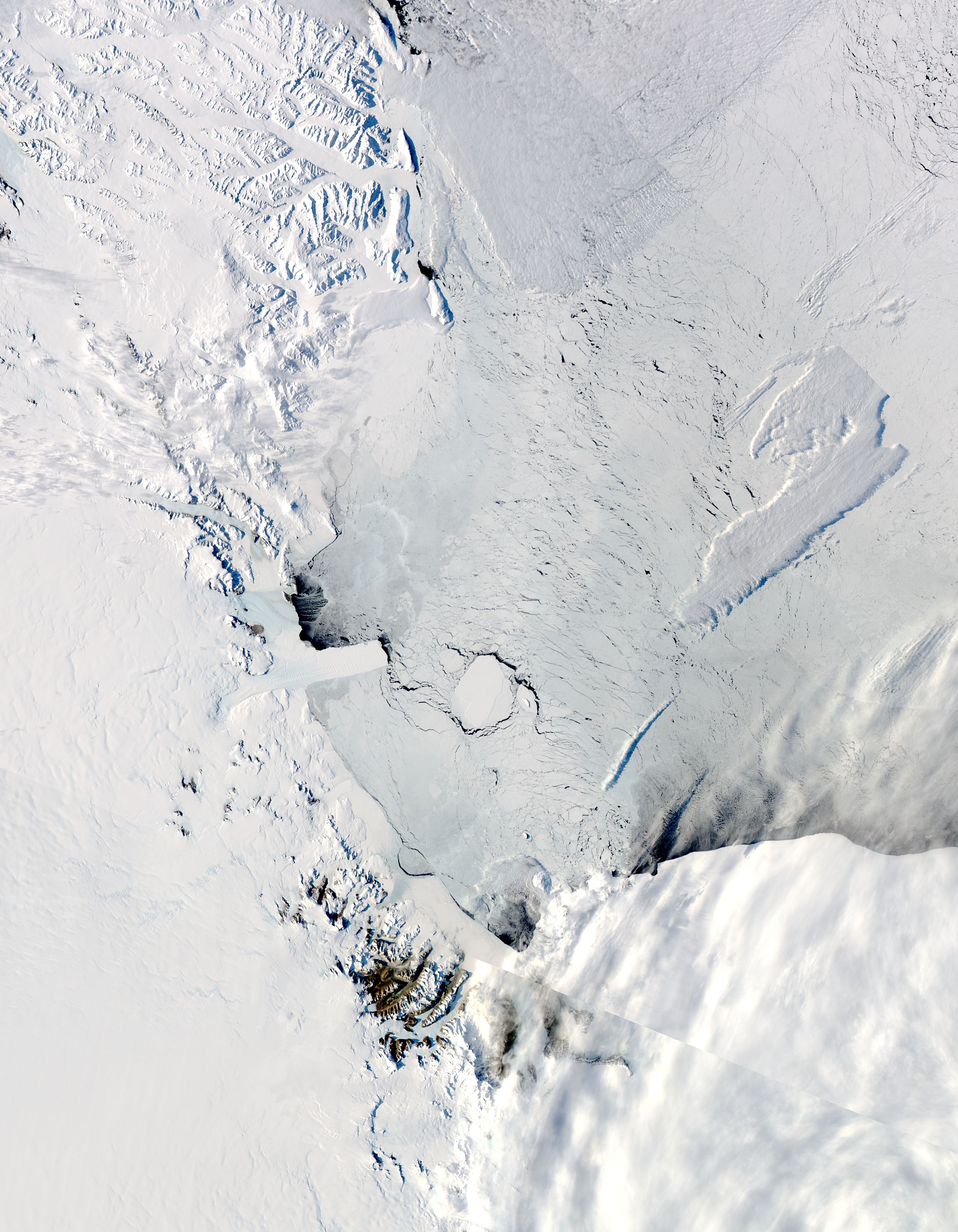
The aim of the MAss LOst in wind fluX (MALOX) project is to better understand the phenomenon of snow transport over a coastal area characterized by strong winds. MALOX relies on a multi-disciplinary approach based on both in situ and remote sensing measurements. Satellite data (MODIS, CALIPSO) analysis will provide spatial and vertical extension of the transport phenomenon. In situ microphysical, thermodynamic, and radiative observations will be aimed at determining the surface and column integrated water content, and characterizing the wind flux at local scale during the summer. Observations will be carried out also during the winter period to observe stronger transport events and to create a complete dataset which will provide a qualitative estimate of the mass loss due to blowing snow sublimation through the difference between the water content measured at two sites along the main wind path on steep slopes, one upstream of the convergence zone of the katabatic flux (Larsen Glacier, LS, 74°57'S 161°46'E) and the other downstream, near the coast (Inexpressible Island, InS, 74°56’S 163°41’E).
-
The IPICS-2kyr-Italia project, through multiple perforations in the Antarctic ice sheet, aims to provide new data on climatic variability over the last 2000 years. The ice caps of the polar caps are valuable natural archives of the Earth's climatic and environmental history. The extraction of the snow and ice cores have taken place during the summer campaign of the Italian expedition to Antarctica 2013/2014. The drilling site GV7 (70°41'S, 158°52'E; 1950 m), chosen for the high snow accumulation, is about 500 km from Mario Zucchelli Station. Drill up to 250 - 500m. Core samples will be studied by chemical, isotopic and physical analyses of the dust and gases contained in the ice. It will thus be possible to reconstruct the evolution of temperatures, the composition of the atmosphere and atmospheric circulation, the frequency of volcanic eruptions and the air pollution produced by human activities over the last millennium with considerable temporal detail.
-
Core samples of the drilling site GV7 are studied by chemical, isotopic and physical analyses of the dust and gases contained in the ice. It will thus be possible to reconstruct the evolution of temperatures, the composition of the atmosphere and atmospheric circulation, the frequency of volcanic eruptions and the air pollution produced by human activities over the last millennium with considerable temporal detail. Analysis: isotopic composition, oxygen and hydrogen content (UniVe and UniPR); tephra (ENEA); wind power (UniMib); trace metals (CNR); ion content chemistry (UniFi).