 Italian Antarctic Data Center
Terra Nova Bay
Type of resources
Available actions
Topics
INSPIRE themes
Provided by
Years
Formats
Representation types
Update frequencies
status
Scale
-
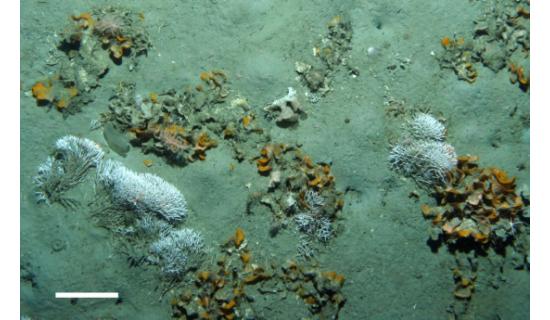
BIOROSS will explore these unique benthic ecosystems of the Ross Sea focusing on bryozoan, coralline algae, cold-water coral and calcifying sponge bioconstructions and their associated communities in order to build vulnerability maps related to global threats (ocean acidification and global warming). To understand the distribution and extent of the Ross Sea bioconstructions, the international team of BIOROSS will study the Antarctic material already available from PNRA and NIWA collections and take part to a new seabed exploration and collection in the Ross Sea on board of R/V Tangaroa. The multidisciplinary approach will address questions on the structure and functioning of builder species and associated communities by means of a suite of cutting-edge instrumentation for offshore survey and sampling, and state-of-the-art analytical facilities and methods, including multibeam echosounders, towed camera, DNA-barcoding, electron microscopy, computed tomography and mass spectrometry.
-
Antarctic ecosystems have a high number of species, that are closely linked to the presence of sea ice and seasonal cycles. This biodiversity is subject to anthropogenic and natural influences. Macrozoobenthic communities are the 'biological memory' of the ecosystem, structuring themselves as a function of environmental changes over the years. Macrozoobenthos samples were collected using suction dredging and scraping techniques, in soft and hard bottoms. Sampling occurred in 5 different sites.
-
Marine sediment grabs
-
Marine sediment grabs
-
Marine sediment cores
-
Marine sediment grabs
-
Marine sediment grabs
-
Marine sediment grabs
-
Marine sediment grabs
-
Marine sediment grabs